A clean driveway makes a real difference to how the whole front of your home looks. But driveways take a beating. They sit out in all weathers, collect algae and moss, sprout weeds through the joints, and pick up oil drips and tire marks. Over time even a smart driveway can end up looking tired and green. Pressure washing is the go to way to bring it back, but there is a right way and a wrong way to do it. Push too hard or use the wrong method and you can strip the surface, blast out the jointing sand, or damage softer materials. In this guide I will explain the different pressure washing methods, how to match them to your driveway, and how to get a great finish without causing any harm.
Why Driveways Need Regular Cleaning
Our damp UK weather is hard on driveways. The mix of rain and shade lets algae and moss build up fast, especially on the parts that do not get much sun. Weeds push up through the gaps between blocks, and oil, fuel, and general road grime get walked and driven across the surface every day.
Left alone, all of this does more than look bad. A layer of algae gets slippery when wet and turns your driveway into a hazard. Moss and weeds trap moisture and can work the surface loose over the years. A regular clean keeps the driveway safe, tidy, and lasting longer, which protects the money you put into it in the first place.
Know Your Driveway Surface First
The single most important thing before you start is knowing what your driveway is made of, because the method changes with the material.
Block paving is tough and handles a firm clean well, but the sand between the blocks needs putting back afterwards. Concrete and imprinted concrete are hard wearing, though imprinted concrete has a protective sealer on top that you must not blast away. Tarmac is the most delicate of the common surfaces and does not like high pressure at all, as too much force loosens the stones and pits the surface. Resin bound driveways also need a gentle touch to protect the finish.
If you are not sure what you have or how it will react, always start soft and test a small area first.
Pressure Washing Methods Explained
There is more than one way to pressure wash, and picking the right one makes the job easier and safer.
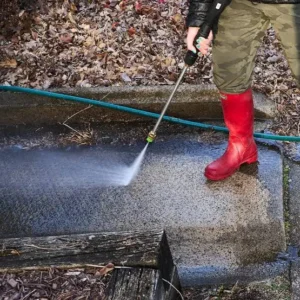
The standard lance is the basic tool that comes with most pressure washers and is commonly used for pressure washing smaller areas. It fires a narrow jet of water and works well for edges, corners, and stubborn spots. The downside is that it cleans in stripes and can leave lines across an open area if you are not careful, and held too close it can gouge softer surfaces.
The rotary flat surface cleaner is the one I would point most people towards for open driveways. It is a round attachment that spins two jets under a housing, giving an even clean across the whole width as you walk it along. It keeps the pressure spread out, so you get a consistent finish without the stripes and with far less risk of damage. It is ideal for block paving and concrete.
The turbo nozzle, sometimes called a rotary nozzle, blasts a spinning point of high pressure. It shifts heavy grime quickly, but it is aggressive, so it is best kept for tough stains on hard surfaces only and used with real care.
For delicate surfaces like tarmac and resin, a lower pressure or soft washing approach is safer. Here you let the cleaning solution do more of the work and use gentler water pressure to rinse, rather than relying on brute force.
As a rule, more pressure is not always better. Keep the nozzle a sensible distance from the surface, hold a steady angle, and let even passes do the work. If a surface starts to mark or lift, back off straight away.
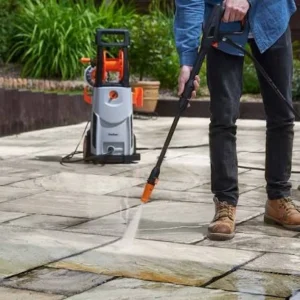
Step by Step: Cleaning a Driveway with a Pressure Washer
Here is the basic order I would follow for a good result.
Start by sweeping the whole driveway to clear leaves, dirt, and loose debris. A clear surface lets you see exactly what you are working with.
Next, deal with the weeds and moss. Pull or treat any weeds in the joints and scrape out heavy moss so the wash can get to the surface underneath.
Treat oil and grease stains before you wash, using a proper degreaser and giving it time to work. Blasting straight over oil just spreads it around and makes it worse.
Now wash in sections. Work in a logical pattern with even, overlapping passes so you do not miss patches or leave lines. Keep moving and keep the tool at a steady height throughout.
Once the driveway is clean and dry, brush fresh kiln dried sand into the joints of block paving to lock the blocks back in place. Skipping this leaves the paving loose and lets weeds return faster.
Finally, think about sealing. A good sealer helps block paving and concrete, resist stains, weeds, and algae, and keeps that fresh look for much longer.
Mistakes That Damage Driveways
The repairs I get asked about most often come from a few avoidable errors.
Using too much pressure on tarmac or imprinted concrete is the big one. It strips the surface, loosens stones, and can wreck the protective seal, leaving the driveway worse than before you started.
Getting the nozzle too close is another. Up close, a narrow jet gouges lines into softer surfaces and can even chip concrete.
Blasting all the sand out of block paving and never replacing it leaves the blocks loose and wobbly and opens the door for weeds to take hold again.
And rushing the job, skipping the degreaser, or letting dirty water pool where it should not are all quick ways to end up disappointed with the result.
When a Clean Is Not Enough
A good pressure wash works wonders on a driveway that is basically sound. But it can only do so much. If your driveway is cracked, sinking in places, riddled with weeds coming up through the base, or the surface has simply worn out, no amount of cleaning will truly bring it back. At that point a fresh driveway is the better and more lasting choice, and it often costs less over time than patching up a failing one year after year.
That is where my team comes in. We install and lay driveways built to last, whether you want the neat look of block paving, the smooth finish of tarmac, or the character of imprinted concrete.
Ready for a Driveway You Will Be Proud Of?
So if your driveway has gone past the point a clean can fix, or you simply fancy a fresh new surface that will look great for years, I would be glad to help. Advanced Driveway Solutions installs quality block paving, tarmac, and imprinted concrete driveways across the area, all laid properly and made to last. For a free quote with no obligation, call me on 07944 680279, or find us at 10 Altham Road, Morecambe, LA4 4UG. Let us give the front of your home the driveway it deserves.