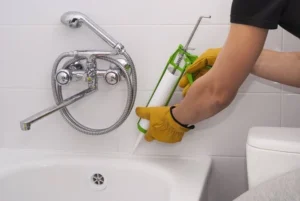
Mastic sealant is one of those small things in a home that you never really notice until it fails. It is the flexible waterproof strip you see running around the edge of your bath, along the back of the kitchen worktop, and around the outside of your windows and doors. Its job is to keep water and draughts out, and it does that quietly for years. But mastic does not last forever, and when it starts to go, water can sneak into places it should never reach. In this guide I will explain what mastic sealant actually is, how to tell when it needs replacing, and how to fit it properly so it lasts and does its job.
What Is Mastic Sealant?
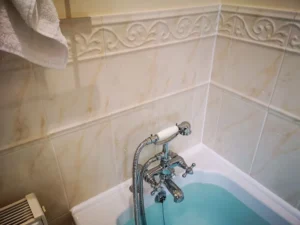
Mastic is a flexible, waterproof sealant used to fill the gaps where two surfaces meet. Most of the mastic in a home is silicone based, which stays bendy and copes well with damp. You will find it sealing the joint between a bath or shower and the wall, around sinks and kitchen worktops, and around the frames of windows and doors both inside and out.
The reason mastic is flexible rather than hard is important. The surfaces it seals move a tiny amount all the time, as the house warms and cools, as a bath fills with water and empties, and as timber and frames expand and shrink. This is why a professional mastic sealant service is important for creating a flexible, lasting seal. A rigid filler would simply crack under all that movement. Mastic flexes with it, which lets it keep a watertight seal for years.
There are different types. Silicone is the one you want for wet areas like bathrooms and kitchens, because it handles water and resists mold better. Acrylic sealants are easier to paint over and suit dry areas, but they are not the right choice anywhere water is involved.
Why Mastic Does Not Last Forever
Even good mastic has a working life. In a busy bathroom or kitchen it is under constant attack from water, steam, heat, and cleaning products, and it is flexing every single day. Over time all of that takes its toll.
The most common sign of aging mastic is black mold. Those black spots and streaks grow in and on the sealant in damp conditions, and once they are established they are very hard to get rid of. The mastic also shrinks, hardens, and starts to pull away from the surfaces it is meant to seal. As a rough guide, sealant in a wet area often needs replacing every few years, though it varies a lot depending on the conditions.
When to Replace Your Mastic Sealant
Knowing when to redo your sealant saves you from bigger problems later. Here are the signs I tell people to watch for.
Black mold is the big one. If your sealant is covered in black spots that will not scrub off no matter what you use, the mould has grown into the material itself, and the only real fix is to take it out and start again.
Cracks, gaps, and peeling are another clear sign. If you can see the mastic splitting, or lifting away from the bath, tiles, or window frame, then its seal is already broken and water can get behind it.
Speaking of which, look for signs of water getting past the seal. Damp patches, staining, or peeling paint on the wall below or beside the sealant tell you water is already sneaking through.
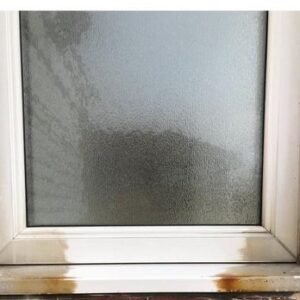
Old sealant that has gone hard, brittle, or badly discoloured has passed its best and will not flex properly any more. And around windows and doors, if you start to feel draughts or notice water coming in when it rains, the mastic has likely failed and needs redoing.
How to Install Mastic Sealant Properly
Fitting mastic looks easy, but a neat, lasting result comes down to the preparation. Here is how to do it properly.
Start by removing every last bit of the old sealant. This is the step people rush, and it is the most important one. Use a sealant removal tool or a sharp blade to cut and peel away all the old mastic. New sealant will not bond over old sealant, so every trace of it has to come off.
Next, clean the surface thoroughly and let it dry completely. Any grease, soap residue, mould, or moisture left behind will stop the new mastic sticking. In a bathroom, it helps to give the area plenty of time to dry out fully before you start.
Now mask off both sides of the joint with masking tape, leaving a small even gap where the sealant will sit. This gives you a clean, straight line and a professional looking finish once you are done.
Choose the right sealant for the job. For a bath, shower, sink, or any wet area, use a good quality silicone made for bathrooms and kitchens, ideally one with mould resistance built in.
Apply the sealant in a single, steady bead along the joint. Keep an even pressure on the gun and move at a smooth, constant speed so the bead stays the same thickness all the way along. Try not to stop and start more than you have to.
Then smooth the bead off before it starts to skin over. You can use a sealant tool or a wet finger to press the mastic into the joint and leave a neat, slightly curved surface. This step is what makes the difference between a tidy seal and a messy one.
Finally, peel away the masking tape while the sealant is still wet, pulling it away cleanly and slowly. Then leave the mastic to cure fully, which usually takes around 24 hours, and keep the area dry during that time.
A few common mistakes to avoid: never apply new sealant over old, never seal onto a wet or dirty surface, and do not use a general purpose or acrylic sealant in a wet area. Each of these leads to a seal that fails quickly and has to be done all over again.
Why It Is Worth Getting Right
A mastic seal is only a thin line, but it is doing a big job. When it fails, water gets in behind baths, worktops, and window frames, and that hidden water causes damp, rot, and staining that costs far more to put right than the sealant ever would. A poor, messy reseal also lets you down every time you look at it.
Getting it right means proper removal of the old sealant, careful preparation, the right product, and a clean, steady hand for the finish. It is fiddly work, and if you would rather have it done neatly and know it will last, this is exactly the kind of resealing I take care of for people, leaving bathrooms and windows watertight and looking sharp again.
Ready to Get Your Seals Fresh and Watertight?
So if the sealant around your bath, shower, or windows has gone black, cracked, or started letting water through, do not leave it to cause damage behind the scenes. A fresh, properly fitted seal protects your home and looks a hundred times better every time you walk past it.
Get in touch with BrightWhite UPVC Cleaning Services today for a free quote with no obligation. Call me on 0161 284 0618, email info@upvcandroofcleaning.co.uk, or find me at 544 Oldham Road, Middleton, Manchester, M24 2EB. Let me get your seals fresh, clean, and watertight again.