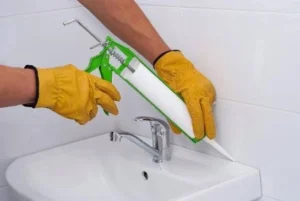
A tube of mastic sealant looks about as simple as products come. It is a soft paste you squeeze into a gap, it sets, and it keeps the water out. But there is actually a fair bit of clever science packed into that tube, and the technology behind modern sealants has come a long way. Knowing roughly what mastic is made of, and how the different types differ, helps you understand why the right sealant lasts for years while the wrong one fails in months. In this post I will break down what mastic sealant is made of, the main types you will come across, and what makes today’s sealants so much better than those of the past.
What Mastic Sealant Is Made Of
Every mastic sealant is a blend of a few key ingredients, each doing its own job.
At the heart of it is the base polymer. This is the main ingredient and it is what gives the sealant its flexibility and its ability to stick to surfaces. The type of polymer used is what really sets one sealant apart from another, as you will see in a moment.
Mixed in with that are fillers, which add body and strength and make up a good part of the bulk. Then there are plasticisers, whose job is to keep the sealant soft and bendy rather than hard and brittle. Curing agents control how the sealant sets once it leaves the tube. And finally there are additives, the extras that give a sealant its particular qualities, such as mould inhibitors for bathrooms, stabilisers to cope with sunlight outdoors, and pigments for colour.
Most sealants cure by reacting with the moisture in the air. That is why a bead of silicone skins over within minutes but takes a day or so to set all the way through. It also explains why a cold, damp room or a thick bead takes longer to cure, and why you need to keep the area dry while it does.
The balance of these ingredients is what you are really paying for. A cheap tube tends to be heavy on filler and light on quality polymer, which is why it hardens, shrinks, and fails quickly. A better product holds more of the good stuff, so it stays flexible and keeps its grip for years.
The Main Types of Sealant and What Sets Them Apart
The base polymer decides what a sealant is good at. Here are the main types and where each one belongs.
Silicone is the most common sealant in the home and the one most people picture. It stays very flexible, it is fully waterproof, and the better ones resist mold well, which is why it is the go to choice for baths, showers, sinks, and kitchens. Its one real drawback is that you cannot paint over it.
Acrylic sealant, sometimes called decorator’s caulk, is water based and made for filling gaps in dry areas, such as around skirting boards and interior trim. Its big advantage is that it takes paint beautifully. It is not as flexible as silicone and it does not cope with water, so it is the wrong choice for a wet area.
Polyurethane sealant is the tough one. It bonds very strongly, handles a lot of movement, and stands up well outdoors, which makes it popular for exterior joints and harder wearing jobs. It can usually be painted too.
Then there are the modern hybrid sealants, often called MS polymers. These are the clever all rounders. They stick to almost any surface, often without a primer, stay flexible, can be painted, cope with both wet and dry conditions, and have very little smell. They cost a bit more, but they solve a lot of the limits of the older types.
What Makes a Sealant Modern
Sealant technology has improved a great deal, and today’s products do things the old ones simply could not.
Mould resistance is a big one. Modern bathroom silicones have powerful mold inhibitors built in, so they stay cleaner and white for far longer before the black spots ever appear.
Flexibility has improved too. Many modern sealants are what is called low modulus, which is a technical way of saying they stretch and move more easily. That matters because the joints they seal are always moving a little, and a sealant that moves with them does not crack or pull away.
Adhesion is better as well. The newer hybrid sealants grip to a huge range of materials straight out of the tube, often with no need for a separate primer, which older sealants frequently required.
On top of that, modern sealants tend to cure faster, smell far less than the strong solvent types of the past, and last longer overall. Those made for outdoor use now have much better resistance to sunlight, so they do not go brittle and crack after just a couple of summers.
Why Composition Matters When Choosing a Sealant
All of this is more than just an interesting background, because the composition of a sealant decides whether it will do its job or fail early.
Choosing the right materials is essential for effective mastic sealant services. Use a silicone made for bathrooms around your bath, and it will stay flexible and resist mold for years. Use a cheap general-purpose tube or acrylic caulk in the same spot, and it may soon crack, allow water through, and turn black. Sealing an exterior joint that moves frequently with a rigid, low-quality product can also cause it to split by the next winter. Matching the right sealant to the job helps ensure a durable, long-lasting finish.
This is exactly why grabbing any old tube from the shed does not always work out. The label matters, and so does knowing what is behind it. A few pounds saved on the wrong sealant often turns into a far bigger bill once water has found its way in behind it.
Why This Knowledge Makes a Difference
You do not need a chemistry degree to reseal a bath, but knowing which sealant suits which situation is a big part of getting a result that lasts. It is one of the things that separates a reseal that still looks good and holds firm years later from one that fails within months.
When I reseal bathrooms, windows, and other joints for people, choosing the right sealant for each spot is simply part of the job, along with the proper preparation and a neat finish. It is the combination of the right product and the right method that makes all the difference in the end.
Ready for a Seal That Is Done Right?
So if the sealant around your home has cracked, gone mouldy, or started letting water through, it may well be that the wrong product was used, or that it has simply reached the end of its life. Either way, a fresh seal fitted with the right sealant will protect your home and look far better.
Get in touch with BrightWhite UPVC Cleaning Services today for a free quote with no obligation. Call me on 0161 284 0618, email info@upvcandroofcleaning.co.uk, or find me at 544 Oldham Road, Middleton, Manchester, M24 2EB. Let me get your seals fresh, watertight, and done right.